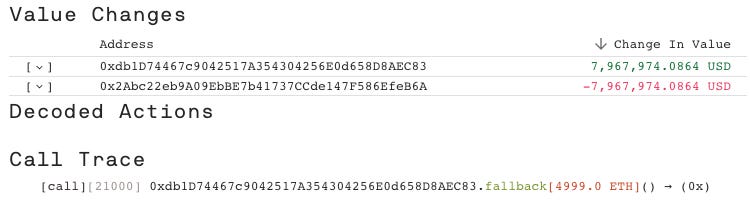
Smart contract audits have become a standard requirement for Web3 projects before mainnet deployment. Yet despite widespread adoption of security audits, 90% of exploited contracts had previously undergone professional security reviews. This striking statistic reveals a critical truth: passing an audit does not guarantee security.
Understanding what auditors actually check and how to prepare your code for audit can dramatically improve outcomes. More importantly, recognizing the limitations of traditional audits helps development teams build more comprehensive security strategies that extend beyond a single pre-deployment review.
This comprehensive checklist guides developers through preparing for smart contract audits, understanding what auditors evaluate, and implementing continuous security practices that address the gaps traditional audits leave behind.
Understanding the Purpose and Limits of Audits
Before diving into audit preparation, developers need realistic expectations about what audits can and cannot accomplish.
What Audits Actually Provide
A professional smart contract audit involves security experts manually reviewing your code to identify vulnerabilities, logic errors, and deviations from best practices. Auditors bring specialized knowledge of common attack patterns, blockchain-specific risks, and security design principles.
Audits provide an independent security assessment from experts who aren't invested in shipping quickly. This outside perspective often catches issues that internal teams miss due to familiarity with the codebase or assumptions about how code behaves.
The audit report documents findings with severity ratings, helping teams prioritize fixes. This creates an auditable record showing that security was taken seriously, which matters for regulatory compliance, investor confidence, and user trust.
The Fundamental Limitations
Auditors work with finite time and budget constraints. A typical audit might allocate 2-4 weeks for a moderately complex protocol. During that time, auditors must understand the entire system, identify vulnerabilities, verify findings, and document results. This time pressure means audits cannot exhaustively explore every possible execution path or attack scenario.
Audits represent a snapshot of code at a specific moment. Any changes after the audit, whether bug fixes, new features, or dependency updates, create potential vulnerabilities that weren't reviewed. Yet most protocols continue evolving after audit, often significantly.
Human auditors, no matter how skilled, can miss vulnerabilities in complex codebases. Cross-contract interactions, subtle state dependencies, and edge cases in mathematical operations are particularly prone to being overlooked during manual review.
Why Audited Code Still Gets Exploited
The statistic that 90% of exploited contracts were previously audited isn't an indictment of auditors' competence. Instead, it reveals systemic issues with relying on point-in-time manual reviews as the primary security mechanism.
Many exploits occur months after the original audit, targeting code that changed post-audit. Teams often make "minor" modifications without recognizing they've introduced security implications. Other exploits target functionality that existed during audit but wasn't prioritized or was dismissed as low severity.
Complex protocols with extensive cross-contract interactions present exponentially more attack surface than auditors can comprehensively review. A sophisticated attacker with unlimited time to analyze deployed code has significant advantages over an auditor with a fixed review period.
Learn More: Smart Contract Audit Limitations: Why Audited Doesn't Mean Secure
Pre-Audit Preparation Checklist
Thorough preparation before engaging auditors maximizes audit value and improves security outcomes.
Code Freeze and Documentation
Establish a code freeze before audit begins. Continuing to modify code during audit wastes auditor time and creates confusion about what's actually being reviewed. Any changes made during audit require re-review, extending timelines and increasing costs.
Complete comprehensive documentation explaining your protocol's purpose, architecture, and critical functionality. Auditors spend significant time understanding what code is supposed to do. Clear documentation accelerates this process, leaving more time for actual security analysis.
Document all assumptions your code makes about external dependencies, user behavior, or system state. These assumptions often hide vulnerabilities when reality diverges from expectations.
Complete Your Own Security Review
Never send code to audit that you haven't thoroughly reviewed yourself. Run automated security scanners, conduct internal code reviews, and perform comprehensive testing before engaging external auditors.
Many audit findings involve basic issues like missing input validation, unchecked return values, or obvious logic errors. Finding these yourself before audit is far cheaper than paying auditors to find them. More importantly, clearing basic issues allows auditors to focus on subtle, complex vulnerabilities that actually require their expertise.
Resolve Known Issues
If you've identified potential security issues during development, resolve them before audit. Sending code with known problems wastes audit budget on issues you already understand.
If certain issues can't be resolved due to design constraints or trade-offs, document them clearly for auditors. Explain why the design choice was made and what risks you've accepted. This context helps auditors evaluate whether your risk assessment is reasonable.
Test Coverage Requirements
Achieve comprehensive test coverage before audit. Auditors shouldn't be discovering that basic functionality doesn't work as intended. Tests should cover:
Normal operation with valid inputs and expected usage patterns. Edge cases with boundary values, extreme parameters, and unusual but valid scenarios. Error handling with invalid inputs, failed external calls, and exceptional conditions. Integration testing of cross-contract interactions and complex workflows.
High test coverage signals code quality and helps auditors understand intended behavior. When auditors find issues, existing tests provide a foundation for regression testing fixes.
Scope Definition
Clearly define what's in and out of audit scope. Specify which contracts should be reviewed, which external dependencies are trusted versus untrusted, and which functionality is critical versus peripheral.
Avoid scope creep during audit. If you add new contracts or functionality mid-audit, expect timeline and cost increases. Major scope changes may require restarting the audit process entirely.
Access Control and Authorization Checklist
Access control vulnerabilities represent one of the most common and critical audit findings. Systematic review of authorization mechanisms is essential.
Role-Based Access Control
Document all privileged roles in your system, including admin, operator, governance, and protocol-specific roles. For each role, specify exactly what permissions it has and why those permissions are necessary.
Verify that every privileged function has appropriate access control checks. The classic mistake is forgetting to restrict a critical function, allowing any caller to execute privileged operations.
Check for centralization risks where a single compromised key could devastate the protocol. Multi-signature requirements, timelock delays, and separation of concerns reduce single points of failure.
Ownership Transfer
If your contracts have ownership transfer mechanisms, verify they work correctly and securely. Missing two-step ownership transfers have caused protocols to permanently lock ownership or accidentally transfer to incorrect addresses.
A secure ownership transfer requires the new owner to accept ownership in a separate transaction. This prevents typos from permanently transferring ownership to an address that can't actually execute the acceptance transaction.
Emergency Functions
Many protocols implement emergency pause functions or other emergency mechanisms. Verify these are properly restricted and cannot be abused by attackers to DOS the protocol.
Document the conditions under which emergency functions should be used and who has authority to invoke them. This clarity prevents both unauthorized use and delays during actual emergencies.
Input Validation and Data Handling Checklist
Improper input validation enables many exploits. Systematic validation of all external inputs is critical.
Parameter Validation
Every function accepting external input should validate parameters before use. Check for:
Zero addresses where contracts or user addresses are expected. Arithmetic bounds preventing overflow, underflow, or impossible values. Array lengths preventing excessive gas consumption or out-of-bounds access. Duplicate entries in arrays or mappings where uniqueness is required.
Never assume callers will provide sensible inputs. Attackers intentionally provide malicious inputs designed to trigger unexpected behavior.
External Call Validation
When calling external contracts, validate return values and handle failures appropriately. Many vulnerabilities arise from ignoring failed external calls or trusting return data without verification.
Be particularly careful with low-level calls that return success boolean instead of reverting. Ignoring these return values means failures silently succeed, creating severe vulnerabilities.
Data Type Considerations
Solidity's type system has subtle behaviors that can create vulnerabilities. Be aware of:
Integer division truncation that may create rounding vulnerabilities in financial calculations. Signed versus unsigned integer behavior and conversion edge cases. Enum values potentially cast from invalid integers. Type conversions that may overflow or lose precision.
Reentrancy Protection Checklist
Reentrancy remains one of the most dangerous vulnerability classes despite being well-known for years.
Checks-Effects-Interactions Pattern
Review every function making external calls to verify it follows Checks-Effects-Interactions:
Perform all validation checks first. Update all state variables next. Make external calls last.
This pattern prevents most reentrancy vulnerabilities by ensuring state is consistent before transferring control to external code.
Reentrancy Guard Application
Apply reentrancy guards to all functions that make external calls or handle value transfers. Don't rely on manual assessment of which functions need protection, as this creates opportunities for mistakes.
Verify that reentrancy guards are consistently applied across related functions. Partial protection where some functions have guards while others don't often indicates incomplete security implementation.
Cross-Function Reentrancy
Check for cross-function reentrancy where an attacker re-enters through a different function than originally called. This requires understanding which functions share state and ensuring protection covers all entry points.
Pay special attention to functions that both make external calls and modify state shared with other external-calling functions.
Read-Only Reentrancy
Consider read-only reentrancy where attackers exploit temporarily inconsistent state without modifying it. This particularly affects protocols that query external state during execution or rely on oracle prices that may be manipulated during callbacks.
Arithmetic and Mathematical Operations Checklist
Financial protocols involve complex calculations where subtle errors can enable exploits.
Overflow and Underflow Protection
Although Solidity 0.8.0+ includes automatic overflow checks, verify that arithmetic operations produce expected results. Intentional unchecked blocks require extra scrutiny to ensure overflow is either impossible or handled correctly.
Be particularly careful with:
Multiplication before division to avoid precision loss. Operations on values with different decimal precision. Calculations involving percentages or basis points. Exponentiation and logarithmic operations.
Rounding and Precision
Review how calculations handle rounding. Consistent rounding in one direction can be exploited through repeated small operations that accumulate favorable rounding.
Verify that precision loss doesn't enable attacks. For example, division that rounds to zero may allow draining contracts through many tiny operations.
Mathematical Invariants
Document mathematical invariants that must hold in your system. For example, total tokens issued should equal sum of all balances, or collateral value should exceed debt value.
Write tests that verify invariants hold across various operations. Broken invariants indicate vulnerabilities even if the specific exploit path isn't immediately obvious.
External Dependency and Integration Checklist
Interactions with external contracts and protocols create significant risk that requires careful analysis.
Trusted Versus Untrusted External Calls
Classify every external contract your code interacts with as trusted or untrusted. Trusted contracts are from reputable protocols and assumed to behave correctly. Untrusted contracts may be malicious.
For untrusted external calls, implement defenses including reentrancy protection, gas limits, return value validation, and sandboxing to limit damage if the external call behaves maliciously.
Oracle Price Manipulation
If your protocol uses price oracles, verify resistance to price manipulation. Recent exploits have targeted oracle manipulation through flash loans, reentrancy, or market manipulation.
Time-weighted average prices provide more manipulation resistance than spot prices. Multiple oracle sources with outlier detection offer redundancy. Sanity checks on price changes prevent accepting clearly manipulated values.
Dependency Versioning
Document exact versions of all external dependencies including OpenZeppelin contracts, Chainlink oracles, Uniswap pools, and other protocol integrations.
Verify that dependency versions don't have known vulnerabilities. Check that dependencies are actively maintained and that upgrades won't break compatibility.
Proxy Pattern Risks
If your protocol uses upgradeable proxies, verify storage layout compatibility between implementations. Storage collisions between proxy and implementation or between implementation versions can corrupt state catastrophically.
Document upgrade procedures and verify that upgrade authorization is properly secured. Unauthorized upgrades or mistakes during upgrades have caused major losses.
Economic and Game Theory Considerations
Smart contracts encode economic mechanisms where incentive misalignment creates vulnerabilities.
Incentive Analysis
For each significant economic mechanism, analyze incentives for all participants. Look for scenarios where rational actors profit by deviating from intended behavior.
Common issues include:
Front-running opportunities where observing pending transactions enables profit. Griefing attacks where attackers can harm others at low cost to themselves. Collusion scenarios where cooperating attackers can extract value. Negative incentives that discourage desired participation.
Flash Loan Attack Vectors
Consider flash loan attack scenarios where attackers can borrow massive capital without collateral for a single transaction. This enables attacks that require large capital that wouldn't be feasible otherwise.
Flash loan attacks often combine multiple protocols, using borrowed funds to manipulate one protocol's state then exploit another protocol that depends on that state.
Liquidation Mechanisms
If your protocol includes liquidation of undercollateralized positions, verify the mechanism works under extreme conditions. Issues to check:
Sufficient incentive for liquidators to act quickly. No gas limit issues preventing liquidation of large positions. Resistance to liquidation front-running that steals liquidator profits. Correct handling of partial liquidations.
Economic Extremes
Test economic mechanisms under extreme conditions including massive price movements, total collapse of collateral value, or liquidity crises. Protocols that work under normal conditions often fail catastrophically during black swan events.
Gas Optimization and DOS Prevention Checklist
Gas efficiency and DOS resistance are often treated separately but are deeply related.
Unbounded Loops
Review all loops to ensure they cannot exceed block gas limits. Loops bounded by user-controlled arrays or dynamic data structures create DOS vectors where attackers can force transactions to fail.
Redesign unbounded loops using pagination, separate processing transactions, or alternative data structures.
Gas Griefing
Check for gas griefing attacks where attackers can force wasteful gas consumption by other users. This includes failing external calls that waste significant gas before reverting or calculations that scale poorly with malicious inputs.
Storage Optimization
While gas optimization is important, prioritize correctness and security. Don't introduce vulnerabilities trying to save gas. Some security mechanisms like reentrancy guards necessarily consume extra gas.
That said, unnecessary gas costs can make protocols unusable. Find the balance between security and efficiency.
Event Emission and Monitoring Checklist
Proper event emission enables monitoring and incident response while poorly designed events hide attacks.
Critical Events
Emit events for all state changes that matter for security monitoring:
Privileged function execution. Large value transfers. Parameter changes affecting protocol behavior. Emergency function activation.
Event Data Completeness
Events should include sufficient data to understand what happened without reconstructing state. Include:
All relevant parameters to the function. Previous and new values for state changes. Caller addresses and affected users. Timestamps or block numbers when timing matters.
Consistent Event Patterns
Use consistent event naming and parameter ordering across your protocol. This simplifies monitoring tools that need to parse events.
Upgradeability and Governance Checklist
Upgradeable contracts and governance mechanisms require special scrutiny as they concentrate power and create attack vectors.
Upgrade Authorization
Verify that only authorized parties can trigger upgrades. Check for timelocks giving users opportunity to exit before malicious upgrades take effect.
Document upgrade procedures and test them thoroughly. Failed upgrades can brick protocols, while successful malicious upgrades can drain all protocol funds.
Storage Layout
For upgradeable contracts, verify storage layout compatibility between versions. Use storage layout tools to detect collisions and verify safe upgrade paths.
Governance Attack Vectors
If governance controls protocol parameters or upgrades, analyze attack scenarios:
Governance token concentration enabling malicious proposals. Flash loan governance attacks where attackers temporarily acquire voting power. Proposal front-running where proposals enable attacks upon execution. Lack of emergency mechanisms to respond to governance attacks.
Testing Strategy Verification
Auditors will review your test suite. Strong testing demonstrates code quality and provides confidence that fixes won't break functionality.
Coverage Metrics
Aim for high code coverage, but recognize that coverage percentage doesn't guarantee security. You can have 100% line coverage while missing critical security scenarios.
More important than percentage is covering:
All edge cases and boundary conditions. All error paths and failure modes. All cross-contract interactions. All access control and authorization paths.
Fuzzing and Property Testing
Beyond unit tests with specific inputs, implement fuzzing that tests with random inputs to find edge cases. Property-based testing verifies invariants hold across arbitrary inputs.
These techniques find issues that humans miss because we don't think to test unusual input combinations.
Integration and End-to-End Testing
Test complete workflows as users would actually interact with your protocol. Unit tests verify individual functions work correctly but miss issues in how components interact.
Documentation Requirements for Auditors
Comprehensive documentation dramatically improves audit effectiveness by accelerating auditor understanding.
Architecture Overview
Provide high-level architecture diagrams showing:
Contract relationships and dependencies. Key workflows and user journeys. Trust assumptions and security boundaries. External integrations and oracle usage.
Function-Level Documentation
Each significant function should have documentation explaining:
Purpose and intended behavior. Parameter meanings and valid ranges. Preconditions and postconditions. Potential security considerations.
NatSpec comments in code provide this inline where auditors need it.
Known Issues and Design Decisions
Document any known limitations, accepted risks, or security trade-offs made during development. Explain the reasoning behind controversial design decisions.
This prevents auditors from spending time on issues you're already aware of and helps them understand whether your risk assessment is reasonable.
Threat Model
Describe your threat model explicitly:
What attackers are you defending against? What assets are you protecting? What attacks are in scope versus out of scope? What trust assumptions does the system make?
Post-Audit Process Checklist
The audit report is the beginning of the post-audit process, not the end of security work.
Findings Review and Prioritization
Review all findings carefully, even those marked low severity. Auditors may underestimate severity or miss connections between multiple low-severity issues that combine into critical vulnerabilities.
Prioritize fixes based on:
Exploitability and likelihood of attack. Potential impact if exploited. Difficulty and risk of implementing fixes. Dependencies between findings.
Fix Verification
After implementing fixes, have the audit firm review them. Many "fixes" introduce new vulnerabilities or incompletely address the original issue.
Add regression tests for each fixed vulnerability. These tests should fail on the vulnerable code and pass after the fix, proving the fix works and preventing reintroduction.
Scope Change Handling
If you make changes beyond fixing specific audit findings, consider whether additional audit is necessary. Major architectural changes, new features, or significant refactoring may require re-audit even if you believe the changes are safe.
Public Disclosure
Publish audit reports publicly to demonstrate security commitment. Transparency builds trust even when audits identify issues, as it shows you're addressing problems systematically.
Be thoughtful about timing public disclosure. Ensure fixes are deployed before publishing reports that describe exploitable vulnerabilities.
Continuous Security Beyond Audits
Audits are valuable but insufficient. Comprehensive security requires ongoing practices throughout the development lifecycle.
Automated Security Testing
Implement automated security scanning in your CI/CD pipeline. Every code change should trigger security checks before merging.
Automated testing catches issues immediately when introduced, while they're easy to fix and context is fresh. Waiting until audit to find problems is far more expensive and time-consuming.
Pre-Deployment Verification
Before each deployment, run comprehensive security checks even for minor changes. Small modifications can have security implications that aren't immediately obvious.
Verify that all security controls are enabled and configured correctly in production deployments. Testnet security settings sometimes differ from mainnet, creating vulnerabilities when deploying.
Post-Deployment Monitoring
Implement monitoring for suspicious activity including unusual transaction patterns, unexpected state changes, or anomalous gas consumption.
Have incident response procedures ready for when monitoring detects potential attacks. Speed matters in responding to exploits, as attackers often drain protocols within minutes of finding vulnerabilities.
Regular Security Reviews
Schedule regular security reviews as your protocol evolves. Don't wait for major releases to review security, as small changes accumulate into significant risk.
The Economics of Audit Preparation
Thorough audit preparation costs development time but dramatically improves outcomes and reduces total costs.
Cost of Finding Issues
Finding and fixing issues yourself during development costs hours of developer time. Having auditors find basic issues costs audit budget on findings that don't require security expertise.
More critically, finding issues after deployment costs your protocol's reputation, user trust, and potentially massive financial losses from exploits.
Audit Efficiency
Well-prepared code with clear documentation allows auditors to work efficiently, finding more issues in the allocated time. Poorly prepared code wastes audit budget on understanding what the code is supposed to do.
Reduced Re-Audit Costs
Comprehensive preparation before initial audit reduces the likelihood of needing multiple audit rounds. Each re-audit cycle costs time and money while delaying launch.
Common Audit Findings and How to Avoid Them
Certain issues appear repeatedly in audit reports. Avoiding these common problems improves code quality and audit efficiency.
Missing Input Validation
Failing to validate function parameters is among the most common findings. Systematically validate every external input before use.
Unchecked Return Values
Low-level calls return success booleans that must be checked. Ignoring return values allows silent failures that attackers can exploit.
Insufficient Access Control
Forgetting to restrict privileged functions is surprisingly common. Systematically review every function that should be restricted.
Poor Error Handling
Functions should handle errors gracefully rather than assuming success. Proper error handling prevents cascading failures and makes debugging easier.
Magic Numbers and Unclear Constants
Hard-coded numbers without explanation make code difficult to audit. Use named constants with clear documentation explaining their purpose and how values were chosen.
Working Effectively with Auditors
Treating auditors as partners rather than adversaries improves outcomes significantly.
Responsive Communication
Be available to answer auditor questions quickly. Delays waiting for clarification waste audit time and extend timelines.
Provide thoughtful answers that address the underlying concern, not just the specific question asked.
Accept Findings Gracefully
Don't become defensive about findings. Auditors are trying to help you ship secure code. Every finding is an opportunity to improve.
If you disagree with a finding's severity or believe it's a false positive, engage constructively with technical reasoning rather than dismissing the concern.
Learn from Findings
Treat audit findings as learning opportunities. Understanding why issues occurred helps prevent similar problems in future development.
Share findings with your entire development team so everyone learns from the issues discovered.
When Multiple Audits Make Sense
A single audit provides valuable security review, but multiple audits from different firms offer additional benefits.
Diverse Perspectives
Different audit firms have different areas of expertise and use different methodologies. Multiple audits increase the likelihood of finding vulnerabilities that any single firm might miss.
High-Value Protocols
Protocols securing significant value or with complex functionality benefit more from multiple audits. The additional cost is negligible compared to potential losses from undiscovered vulnerabilities.
Complementary Approaches
Combining audits from firms with different specializations provides comprehensive coverage. One firm might excel at finding economic issues while another focuses on low-level technical vulnerabilities.
Building Internal Security Capabilities
While external audits provide valuable expertise, building internal security capabilities strengthens your overall security posture.
Security Champions
Designate team members as security champions who develop specialized security knowledge and review code from a security perspective before external audit.
Security Training
Invest in security training for your entire development team. Developers who understand common vulnerabilities write more secure code from the start.
Secure Development Lifecycle
Integrate security throughout development rather than treating it as a pre-deployment checkpoint. Security should influence architecture decisions, code review practices, and testing strategies.
The Path Forward for Smart Contract Security
The Web3 ecosystem is maturing beyond treating audits as the primary security mechanism. Leading projects implement comprehensive security programs that include:
Continuous automated testing throughout development. Multiple layers of defense including security patterns, automated verification, and manual review. Ongoing security monitoring and incident response capabilities. Regular security reviews as code evolves.
Audits remain valuable as part of this comprehensive approach but are insufficient alone. The shift from "audit and pray" to continuous security practices reflects the industry learning from costly exploits and recognizing that deployed code faces determined attackers with unlimited time to find vulnerabilities.
Conclusion
Smart contract audits provide valuable security review from independent experts but cannot guarantee security. The striking reality that 90% of exploited contracts were previously audited demonstrates that traditional point-in-time reviews are insufficient for securing complex, evolving protocols.
Effective audit preparation through comprehensive testing, clear documentation, and systematic security review improves audit outcomes and demonstrates code quality. More importantly, building continuous security practices that extend beyond single audits creates resilient security postures that adapt as threats evolve.
The future of smart contract security lies in combining automated verification, manual expertise, and continuous monitoring throughout the development lifecycle. Audits are one valuable component of this comprehensive approach, but treating them as sufficient security creates dangerous false confidence.
Development teams serious about security implement automated testing that catches vulnerabilities immediately when introduced, maintain comprehensive test suites that verify security properties, and treat audits as validation of their ongoing security practices rather than the primary mechanism for finding issues.
Security is not a one-time checkbox before deployment. It's an ongoing commitment that requires investment in tools, training, and processes that systematically identify and address vulnerabilities throughout a protocol's lifecycle.