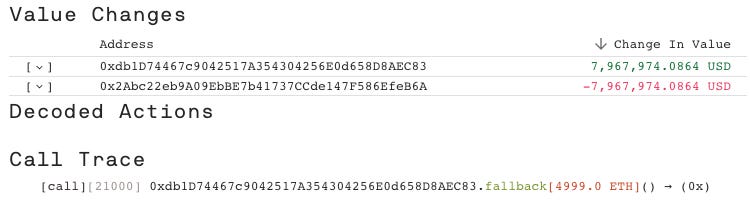
Reentrancy attacks remain one of the most devastating vulnerabilities in smart contract security, responsible for hundreds of millions of dollars in losses since the infamous DAO hack of 2016. Despite being well-documented for nearly a decade, reentrancy vulnerabilities continue to plague Web3 projects, with recent exploits demonstrating that traditional security approaches are failing to catch these critical flaws before deployment.
Understanding how to prevent reentrancy attacks through comprehensive testing is essential for any development team building on blockchain platforms. This guide explores the nature of reentrancy vulnerabilities, why they persist despite known prevention patterns, and how modern testing tools can detect these issues before they reach production.
Understanding Reentrancy Attacks in Smart Contracts
A reentrancy attack occurs when a malicious contract calls back into the original contract before the first execution completes. This allows the attacker to repeatedly execute functions in an unexpected state, typically draining funds or manipulating contract logic before balances or state variables are properly updated.
The vulnerability arises from a fundamental characteristic of blockchain systems: when a contract sends ETH or calls another contract, it transfers execution control to the recipient. If the recipient is malicious, it can call back into the original contract, re-entering functions that are still mid-execution.
The Classic Reentrancy Pattern
Consider a withdrawal function that checks the user's balance, sends ETH, and then updates the balance:
function withdraw() public {
    uint256 amount = balances[msg.sender];
    require(amount > 0, "Insufficient balance");

    (bool success, ) = msg.sender.call{value: amount}("");
    require(success, "Transfer failed");

    balances[msg.sender] = 0;
}
An attacker can exploit this by creating a malicious contract with a fallback function that calls withdraw() again. Since the balance isn't updated until after the ETH transfer, the attacker can drain the contract by repeatedly withdrawing the same balance.
Types of Reentrancy Vulnerabilities
Reentrancy attacks come in several variants, each requiring different testing approaches:
Single-Function Reentrancy occurs when a function calls back into itself before completing. This is the classic DAO attack pattern and the most straightforward to understand, though surprisingly still common in production code.
Cross-Function Reentrancy happens when the attacker re-enters a different function that shares state with the original. For example, a malicious contract might call withdraw(), which then re-enters transfer() before withdraw() updates its state. This variant is more subtle and harder to detect through manual code review.
Cross-Contract Reentrancy involves multiple contracts sharing state. An attacker exploits one contract to manipulate shared state that another contract depends on, creating complex attack vectors that span multiple transactions and contracts.
Read-Only Reentrancy is an emerging pattern where the attacker doesn't modify state but exploits the inconsistent state during execution to manipulate protocol logic. This variant has gained attention in recent DeFi exploits where protocols rely on external state that becomes temporarily inconsistent during reentrancy.
Why Traditional Security Approaches Miss Reentrancy Bugs
Despite reentrancy being one of the oldest and most well-known smart contract vulnerabilities, it continues to appear in audited code. Recent data shows that 90% of exploited contracts had previously undergone security audits, yet critical vulnerabilities like reentrancy remained undetected.
The Limitations of Manual Auditing
Human auditors reviewing thousands of lines of code can miss subtle reentrancy paths, especially in complex DeFi protocols with multiple contract interactions. Cross-function and cross-contract reentrancy patterns are particularly difficult to trace manually, as they require understanding intricate state dependencies across entire codebases.
Auditors typically have limited time and must prioritize reviewing core logic, access controls, and business requirements. Edge cases and complex interaction patterns may receive less scrutiny, creating gaps where reentrancy vulnerabilities can hide.
The Coverage Problem
Traditional testing approaches often lack comprehensive coverage of reentrancy scenarios. Development teams typically write unit tests for expected behavior but may not systematically test malicious callback scenarios. Creating manual tests for every possible reentrancy vector becomes exponentially complex as contract interactions increase.
Even when developers attempt to test reentrancy scenarios, they must anticipate all possible attack vectors. This requires security expertise that many development teams lack, and a single missed scenario can result in a critical vulnerability.
The Checks-Effects-Interactions Pattern
The most widely recommended defense against reentrancy is the Checks-Effects-Interactions pattern, which restructures code to follow a specific execution order:
- Checks: Validate all conditions and requirements
- Effects: Update all state variables
- Interactions: Make external calls to other contracts
Applying this pattern to our earlier example:
function withdraw() public {
    // Checks
    uint256 amount = balances[msg.sender];
    require(amount > 0, "Insufficient balance");

    // Effects
    balances[msg.sender] = 0;

    // Interactions
    (bool success, ) = msg.sender.call{value: amount}("");
    require(success, "Transfer failed");
}
By updating the balance before the external call, the contract prevents reentrancy because subsequent calls will find a zero balance.
When Checks-Effects-Interactions Isn't Enough
While this pattern prevents many reentrancy attacks, it has limitations in complex systems. Cross-function reentrancy can still occur if multiple functions share state but don't coordinate their updates properly. Cross-contract reentrancy may bypass this protection entirely when state is shared across contracts.
Additionally, the pattern doesn't prevent read-only reentrancy, where the attacker exploits inconsistent state without modifying it. Protocols that rely on external state queries during execution remain vulnerable even when following Checks-Effects-Interactions strictly.
Reentrancy Guards and Their Trade-offs
OpenZeppelin's ReentrancyGuard is a popular mutex-style protection that prevents nested calls:
contract Protected is ReentrancyGuard {
    function withdraw() public nonReentrant {
        // Function logic
    }
}
The nonReentrant modifier sets a lock at the start of execution and releases it at the end, blocking any re-entrant calls. This provides strong protection but comes with trade-offs.
Gas Costs and Complexity
Reentrancy guards add gas overhead to every protected function call. While the cost is relatively small, it accumulates in high-frequency functions or complex protocols with many protected operations.
More significantly, reentrancy guards can break legitimate cross-contract interactions. Many DeFi protocols intentionally support callback patterns for composability. A blanket reentrancy guard may prevent both malicious and legitimate callbacks, forcing developers to make difficult trade-offs between security and functionality.
The Coverage Challenge
Developers must remember to apply reentrancy guards to every vulnerable function. In large codebases, it's easy to miss functions or to fail to recognize that a new function has reentrancy risk. This manual approach relies on developer discipline and security awareness, creating opportunities for mistakes.
Testing for Reentrancy Vulnerabilities
Comprehensive testing is essential for preventing reentrancy attacks from reaching production. However, effective reentrancy testing requires more than standard unit tests.
The Challenge of Manual Test Creation
Writing manual tests for reentrancy requires creating malicious contracts that attempt callbacks during execution. For a single withdrawal function, you might write:
contract MaliciousAttacker {
    TargetContract target;
    uint256 attackCount;

    function attack() public {
        target.withdraw();
    }

    receive() external payable {
        if (attackCount < 5 && address(target).balance > 0) {
            attackCount++;
            target.withdraw();
        }
    }
}
This tests one specific attack vector against one function. Testing cross-function reentrancy requires additional malicious contracts that call different functions during callbacks. Testing cross-contract scenarios requires setting up multiple contracts with shared state.
The combinatorial explosion of possible reentrancy paths makes comprehensive manual testing impractical. A moderate-sized protocol might have dozens of functions with external calls, each potentially vulnerable to reentrancy through multiple paths.
Static Analysis for Reentrancy Detection
Static analysis tools examine code without executing it, looking for patterns that indicate reentrancy vulnerabilities. These tools can quickly scan large codebases and identify functions that make external calls before updating state.
The challenge with static analysis is balancing false positives and false negatives. Overly aggressive detection flags many safe patterns as vulnerable, creating noise that developers must sort through. Conservative detection misses subtle vulnerabilities, especially complex cross-function and cross-contract scenarios.
Effective static analysis for reentrancy requires understanding the specific patterns and state dependencies in each codebase. Generic rules often miss context-specific vulnerabilities that require deeper semantic analysis.
Dynamic Testing Approaches
Dynamic testing executes code with various inputs to observe behavior. For reentrancy testing, this means actually attempting malicious callbacks during function execution.
Fuzzing, a dynamic testing technique, generates random or semi-random inputs and monitors for unexpected behavior. For reentrancy testing, a fuzzer might automatically generate malicious contracts that attempt callbacks during different execution states.
The advantage of dynamic testing is that it finds real vulnerabilities by demonstrating actual exploits. Unlike static analysis, which may flag theoretical issues, dynamic testing proves that an attack path exists and can be exploited.
Mutation Testing for Reentrancy Protection
Mutation testing offers a unique approach to verifying reentrancy protections. This technique deliberately introduces vulnerabilities into code and verifies that your test suite catches them.
For reentrancy protection, mutation testing might:
- Remove reentrancy guards from protected functions
- Reorder code to violate Checks-Effects-Interactions
- Remove state updates that prevent reentrancy
- Modify lock variables used in custom protection mechanisms
If your tests pass after these mutations, it indicates that your test suite isn't actually verifying reentrancy protection. This reveals gaps in test coverage that manual test review might miss.
Finding Gaps in Protection
Mutation testing is particularly valuable for complex protocols where developers believe they have adequate protection. By systematically weakening protections, mutation testing reveals whether those protections are actually verified by tests or merely assumed to work.
This approach catches a common problem: developers add reentrancy guards or restructure code to follow Checks-Effects-Interactions, but never verify that removing those protections would cause tests to fail. The protection exists in code but isn't actually tested.
Automated Reentrancy Testing with Olympix
Olympix provides comprehensive automated testing specifically designed to detect reentrancy vulnerabilities before deployment. Rather than relying on manual test creation or generic static analysis, Olympix combines multiple testing techniques to systematically verify reentrancy protections.
Intelligent Fuzzing for Reentrancy
Olympix's fuzzing engine automatically generates malicious contracts that attempt reentrancy attacks during test execution. Rather than requiring developers to manually write attack scenarios, the fuzzer explores possible callback patterns across all functions with external calls.
The fuzzer understands common reentrancy patterns and automatically tests:
- Single-function reentrancy by calling the same function during callbacks
- Cross-function reentrancy by calling related functions that share state
- Complex callback chains that might create unexpected state inconsistencies
- Edge cases with specific gas limits or call depths
This automated approach achieves coverage that would be impractical with manual testing, exploring thousands of potential attack vectors without developer effort.
Static Analysis Integration
Olympix combines fuzzing with static analysis to identify high-risk functions that warrant extra scrutiny. The static analyzer examines code patterns to find:
- Functions that make external calls before updating state
- State variables shared across multiple functions with external calls
- Missing reentrancy guards on functions that handle value transfers
- Inconsistent application of protection patterns across similar functions
By prioritizing fuzzing efforts on high-risk functions identified through static analysis, Olympix efficiently allocates testing resources to the most likely vulnerability locations.
Mutation Testing for Protection Verification
Olympix's mutation testing specifically targets reentrancy protections. The system automatically:
- Removes
nonReentrant modifiers from protected functions - Reorders code to violate Checks-Effects-Interactions patterns
- Disables custom reentrancy protection mechanisms
- Modifies state updates that prevent reentrancy
After each mutation, Olympix runs the full test suite to verify that tests fail appropriately. If tests pass with protections removed, Olympix flags the gap in test coverage, indicating that the protection isn't actually verified.
This catches a critical issue: code that appears secure but lacks tests proving the security measures work as intended.
Continuous Security Throughout Development
Unlike traditional audits that happen once before deployment, Olympix integrates into the development workflow to provide continuous security verification. Every code change triggers automated testing, catching new reentrancy vulnerabilities immediately.
This approach aligns with how modern DeFi protocols actually develop. Smart contracts aren't static artifacts, they evolve through upgrades, new features, and bug fixes. Each change potentially introduces new reentrancy paths that need verification.
Continuous testing catches vulnerabilities when they're introduced, while the code and context are fresh in developers' minds. This is far more effective than discovering issues months later during a pre-deployment audit.
Real-World Reentrancy Exploits
Understanding real exploits demonstrates why comprehensive testing is essential. Recent attacks show that reentrancy remains a critical threat despite years of awareness and documentation.
Cross-Function Reentrancy in DeFi
Multiple recent DeFi exploits have used cross-function reentrancy, where the attacker re-enters a different function than the one initially called. These attacks succeed because developers focused on protecting individual functions but didn't consider interactions between functions sharing state.
In these exploits, the vulnerable protocol followed Checks-Effects-Interactions within individual functions. However, the attacker could call Function A, which made an external call, then re-enter through Function B, which relied on state that Function A hadn't finished updating.
Traditional testing missed these vulnerabilities because tests focused on individual function behavior rather than systematically exploring all possible callback scenarios across function boundaries.
Read-Only Reentrancy
Recent exploits have leveraged read-only reentrancy, where the attacker doesn't modify state during the reentrant call but exploits the temporarily inconsistent state to manipulate protocol logic.
For example, a lending protocol might check collateral value during liquidation by calling an external price oracle. If that oracle makes callbacks during price calculation, the attacker can perform actions while the collateral value is in an inconsistent state, even though they're not directly modifying the lending protocol's storage.
These attacks are particularly insidious because they bypass many traditional reentrancy protections. Reentrancy guards typically only block state-modifying calls, and Checks-Effects-Interactions doesn't help when the vulnerability lies in reading inconsistent external state.
Testing Strategy for Reentrancy Prevention
A comprehensive reentrancy testing strategy combines multiple approaches to achieve thorough coverage.
Start with Static Analysis
Begin by using static analysis to identify all functions that make external calls. Flag functions that:
- Make external calls before updating state
- Handle value transfers without reentrancy guards
- Share state with other functions that make external calls
- Rely on external state during execution
This creates a prioritized list of functions requiring reentrancy testing.
Implement Automated Fuzzing
Use automated fuzzing to systematically explore possible reentrancy attack vectors. Configure the fuzzer to:
- Generate malicious contracts for each function with external calls
- Test callbacks at different points during execution
- Explore cross-function reentrancy by calling different functions during callbacks
- Vary gas limits and call depths to find edge cases
Run fuzzing continuously during development to catch new vulnerabilities as code changes.
Verify Protection with Mutation Testing
Apply mutation testing to verify that reentrancy protections are actually tested. Focus mutations on:
- Removing or disabling reentrancy guards
- Reordering code to violate Checks-Effects-Interactions
- Modifying state updates that prevent reentrancy
- Weakening custom protection mechanisms
If tests pass after mutations, add new tests that specifically verify the protections work correctly.
Test Integration Points
Pay special attention to functions that integrate with external protocols. These are high-risk areas where:
- You don't control the external contract's behavior
- Complex interactions may create unexpected callback opportunities
- Read-only reentrancy may occur through external state queries
- Cross-contract reentrancy may affect shared state
Test these integration points with malicious mock contracts that attempt callbacks during all external interactions.
Beyond Testing: Defense in Depth
While comprehensive testing is essential, a complete security strategy includes multiple layers of protection.
Apply Reentrancy Guards Systematically
Use reentrancy guards on all functions that make external calls or handle value transfers. Don't rely on manual judgment about which functions need protection, as this creates opportunities for mistakes.
Consider using a custom reentrancy guard that provides more granular control than a simple mutex if your protocol requires legitimate cross-contract callbacks.
Follow Checks-Effects-Interactions Consistently
Make Checks-Effects-Interactions a coding standard across your entire codebase. Enforce this pattern during code review and use linting tools to flag violations.
Document any exceptions to this pattern and provide clear justification for why deviation is necessary. These exceptions should receive extra scrutiny during security reviews.
Minimize External Calls
Reduce the attack surface by minimizing external calls. Each external call is a potential reentrancy vector, so consider:
- Batching multiple external calls when possible
- Using pull patterns for payments instead of push patterns
- Deferring external calls to separate transactions when practical
- Careful evaluation of whether external calls are truly necessary
Monitor and Respond
Implement monitoring to detect suspicious patterns that might indicate reentrancy attacks. Look for:
- Unusually high gas usage in specific functions
- Repeated calls to the same function within a single transaction
- Unexpected state changes between expected execution points
- Callbacks from unknown contracts during execution
Having detection and response capabilities provides a final safety layer if vulnerabilities slip through testing.
The Cost of Reentrancy Vulnerabilities
Reentrancy attacks have resulted in some of the largest losses in blockchain history. The DAO hack in 2016 drained 3.6 million ETH, worth approximately $50 million at the time. More recent attacks continue to exploit reentrancy for millions in losses.
Beyond direct financial losses, reentrancy exploits damage protocol reputation, erode user trust, and create regulatory scrutiny. Protocols that suffer major exploits often struggle to recover, even after addressing the technical vulnerability.
The cost of comprehensive reentrancy testing is negligible compared to the potential losses from a single exploit. Yet many projects still rely on manual testing and one-time audits rather than systematic automated verification.
Implementing Continuous Reentrancy Testing
Organizations serious about preventing reentrancy attacks should implement continuous automated testing rather than relying solely on pre-deployment audits.
Integration with Development Workflow
Integrate automated reentrancy testing into your CI/CD pipeline so that every code change triggers comprehensive security checks. Configure tests to:
- Run automatically on every pull request
- Block merges if new reentrancy vulnerabilities are detected
- Provide clear reports showing exactly where vulnerabilities exist
- Track security metrics over time to identify trends
Developer Education
Educate your development team about reentrancy patterns and testing approaches. Ensure developers understand:
- How reentrancy attacks work at a technical level
- Why traditional protections sometimes fail
- How to write code that resists reentrancy
- How to interpret automated testing results
- When to escalate potential issues to security specialists
Regular Security Reviews
Supplement automated testing with regular security reviews focusing on:
- Complex cross-contract interactions
- Integration points with external protocols
- Recent code changes that modified functions with external calls
- Areas where automated testing flagged potential issues
These reviews should specifically look for subtle reentrancy patterns that might be difficult for automated tools to detect.
Measuring Testing Effectiveness
Track metrics to ensure your reentrancy testing remains effective as your codebase evolves.
Coverage Metrics
Measure what percentage of functions with external calls have been tested for reentrancy. Track:
- Functions with fuzz testing coverage
- Functions with manual reentrancy test cases
- Functions protected by reentrancy guards
- Functions following Checks-Effects-Interactions pattern
Aim for 100% coverage of high-risk functions and comprehensive coverage overall.
Mutation Testing Results
Track mutation testing results to verify that your test suite actually validates reentrancy protections. Monitor:
- Percentage of reentrancy-related mutations caught by tests
- Functions where mutations pass unexpectedly
- Trends in mutation testing effectiveness over time
- Gaps in test coverage revealed by mutations
Use mutation testing results to identify where to add new tests.
Time to Detection
Measure how quickly new reentrancy vulnerabilities are detected after code changes. Faster detection means:
- Issues are caught while context is fresh
- Fixes are cheaper and easier
- Risk of vulnerabilities reaching production is lower
- Development velocity remains high
The Future of Reentrancy Prevention
As smart contract development matures, reentrancy testing continues to evolve with new techniques and approaches.
Formal Verification Integration
Formal verification mathematically proves that code meets security specifications. For reentrancy, formal verification can prove that no execution path allows reentrant calls to reach vulnerable state.
Combining formal verification with testing provides the strongest possible assurance. Verification proves properties hold mathematically, while testing demonstrates practical exploitability of any issues found.
AI-Assisted Vulnerability Detection
Machine learning models trained on historical exploits can identify patterns that suggest reentrancy vulnerabilities. These models recognize subtle indicators that traditional static analysis might miss.
AI-assisted detection complements rule-based analysis by finding previously unknown patterns and variations of known attack vectors.
Cross-Chain Considerations
As protocols deploy across multiple chains, reentrancy testing must account for chain-specific differences in:
- Gas costs and execution limits
- External call semantics
- Available protection mechanisms
- Common attack patterns
Testing frameworks need to support multi-chain scenarios and understand how reentrancy behavior varies across different blockchain platforms.
How Olympix Detects and Prevents Reentrancy Vulnerabilities
Olympix provides automated security tools designed to identify reentrancy vulnerabilities throughout the smart contract development lifecycle. The platform integrates into development workflows to provide continuous, proactive security testing.
Static Analysis for Reentrancy Pattern Detection
Olympix's static analysis examines smart contract code to identify patterns that commonly lead to reentrancy vulnerabilities. The analyzer identifies high-risk functions that make external calls and can flag potential security issues for further testing.
Automated Fuzzing for Vulnerability Discovery
Olympix uses fuzzing to test contracts by automatically generating test scenarios that attempt to exploit potential vulnerabilities. This automated approach explores attack vectors that would be impractical to test manually, helping identify real exploitable issues rather than just theoretical concerns.
Mutation Testing for Protection Verification
Olympix applies mutation testing to verify that security protections actually work as intended. The system can modify code to remove or weaken protections, then verify that tests catch these changes. This identifies gaps where security measures exist in code but aren't actually verified by the test suite.
Continuous Integration
Olympix integrates into CI/CD pipelines to provide ongoing security verification as code changes, rather than relying solely on point-in-time security audits.
Development Workflow Integration
Olympix works with standard development tools and testing frameworks used by smart contract developers, allowing security testing to integrate into existing workflows.
Conclusion
Reentrancy attacks remain one of the most critical threats in smart contract security, responsible for hundreds of millions in losses despite being well-understood for years. The persistence of these vulnerabilities demonstrates that traditional security approaches are insufficient.
Manual testing and one-time audits cannot provide comprehensive coverage of all possible reentrancy vectors. As protocols grow more complex with extensive cross-contract interactions, the attack surface expands beyond what manual review can effectively secure.
Effective reentrancy prevention requires a multi-layered approach combining secure coding patterns, systematic automated testing, and continuous security verification throughout the development lifecycle. Organizations that implement comprehensive automated testing catch vulnerabilities early, when they're cheapest to fix and before they can be exploited.
Olympix provides the automated testing infrastructure necessary for thorough reentrancy protection. By combining intelligent fuzzing, static analysis, and mutation testing, Olympix systematically verifies that your reentrancy protections work as intended, catching vulnerabilities that manual approaches miss.
The cost of implementing robust reentrancy testing is minimal compared to the potential losses from a single exploit. As the Web3 ecosystem matures and security expectations increase, comprehensive automated testing transitions from optional to essential for any serious development team.
Reentrancy vulnerabilities are preventable through proper testing. The question is whether your organization will implement comprehensive verification before or after an exploit forces the issue.