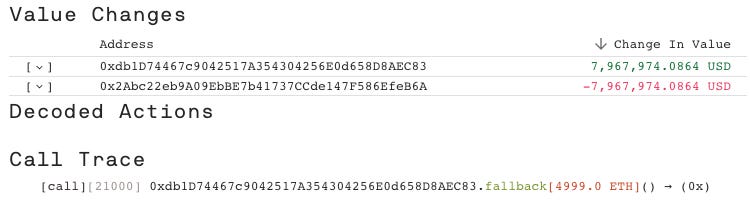
The stark reality of Web3 security is sobering: 90% of exploited smart contracts were previously audited, yet the industry continues to hemorrhage billions of dollars annually to preventable vulnerabilities. The Balancer hack ($121M), the $1.8M Abracadabra Money exploit, and the $1.3M Kame Aggregator breach all share a common thread: they could have been prevented with proper developer security training.
This isn't just about teaching developers to avoid bugs. It's about fundamentally transforming how smart contract code is conceived, written, reviewed, and deployed. Traditional "audit and pray" approaches have demonstrably failed. The solution requires building security capabilities directly into your development team through systematic, comprehensive training that goes far beyond cursory vulnerability checklists.
The True Cost of Inadequate Security Training
Before diving into training methodologies, let's establish why this matters beyond the obvious financial losses. When the Paxos team accidentally minted $300 trillion PYUSD tokens, the immediate financial impact was contained, but the reputational damage, emergency response costs, regulatory scrutiny, and erosion of user trust created cascading consequences that extended far beyond the technical incident itself.
Consider the full lifecycle cost of security failures. A vulnerability discovered during development costs hours to fix. The same vulnerability found during an external audit costs thousands in audit fees, deployment delays, and opportunity costs. That vulnerability discovered post-deployment can cost millions in losses, potentially destroying the entire protocol and permanently damaging team members' professional reputations.
The ROI calculation is straightforward: comprehensive developer security training represents a small upfront investment that dramatically reduces tail-risk exposure. Organizations that invest in developer security training report 60-75% reductions in audit findings and catch critical vulnerabilities months earlier in the development cycle.
Building a Security-First Organizational Framework
Establishing the Security Culture Foundation
Security culture doesn't emerge organically. It requires deliberate cultivation through organizational structure, incentives, and leadership commitment. Start by appointing a security champion within your development team, someone who becomes the go-to resource for security questions and drives security initiatives forward.
Create dedicated time for security work in your sprint planning. If security is always deprioritized beneath feature development, your team will internalize that security is optional. Allocate 15-20% of development capacity specifically to security improvements, training, and preventive work.
Implement a "security wins" recognition program. When developers catch vulnerabilities during code review, when they proactively add security test cases, when they challenge potentially unsafe design decisions, celebrate these moments publicly. What gets recognized gets repeated.
Establish psychological safety around security discussions. Developers must feel comfortable admitting when they don't understand a security concept or when they've made a mistake. Punitive responses to security issues create cover-up behaviors that amplify risk. Instead, treat every security finding as a learning opportunity for the entire team.
Defining Security Standards and Processes
Document your security standards explicitly. Create a living document that covers coding standards, mandatory security checks, review requirements, and deployment procedures. This document should evolve as your team learns and as new attack vectors emerge.
Implement tiered code review requirements based on risk. Standard feature additions might require one peer review. Functions that handle value transfers, modify critical state, or implement access controls should require review by multiple team members, including your security champion. Changes to upgrade mechanisms or governance systems should undergo the most rigorous review process.
Create security gates in your development pipeline. Code cannot merge without passing automated security scans. Deployments cannot occur without security checklist completion. Pull requests touching financial logic require specific security-focused approval. These gates make security non-optional and embed it directly into workflow.
Comprehensive Core Curriculum: What Every Developer Must Master
Phase 1: Foundational Security Concepts (Weeks 1-2)
Understanding the Blockchain Threat Model
Begin with first principles. New developers need to internalize that blockchain environments present a fundamentally different security paradigm than traditional software development. Code immutability means bugs become permanent unless expensive upgrade mechanisms exist. Public visibility means attackers can study code at leisure before attacking. Financial incentives mean determined, well-resourced adversaries will actively seek vulnerabilities.
Train developers to think about the unique attack surfaces: front-running through mempool observation, MEV extraction opportunities, oracle manipulation, governance attacks, economic exploits that remain within protocol rules but extract value, and cross-protocol composability risks where individually secure contracts create vulnerabilities when combined.
Use the case study of the Balancer hack to illustrate these concepts. Walk through the timeline: how attackers identified the vulnerability, how they structured the attack transaction, how the economic incentives made the attack profitable, and crucially, how the vulnerability persisted despite multiple audits because auditors didn't fully explore the composability attack surface.
The EVM Execution Environment
Developers must understand how the EVM actually executes code to write secure smart contracts. Cover gas mechanics and how gas limitations can create denial-of-service vulnerabilities. Explain storage layout and how improper storage packing can create unexpected state corruption. Detail the call stack depth and how attackers historically exploited this.
Dive deep into the difference between call, delegatecall, and staticcall. Use real exploit examples where delegatecall was misused, allowing attackers to execute malicious code in the context of the victim contract. The Parity wallet hack provides an excellent case study here: a simple misunderstanding of delegatecall led to $30M+ in locked funds.
Explain how Solidity's compilation process can hide dangerous behaviors. Show examples where high-level Solidity code appears safe but compiles to bytecode with subtle vulnerabilities. Teach developers to verify their assumptions by examining compiler output for critical functions.
Critical Vulnerability Classes in Depth
Reentrancy: Beyond the Basics
Most developers learn about reentrancy through the DAO hack example, but surface-level understanding isn't sufficient. Teach read-only reentrancy, where attackers don't steal funds directly but manipulate view functions to return incorrect data that other protocols rely on. Cover cross-function reentrancy, where the vulnerability emerges from interactions between multiple functions rather than within a single function.
Create hands-on exercises where developers must exploit reentrancy vulnerabilities in controlled environments. Then have them implement multiple mitigation strategies: checks-effects-interactions pattern, ReentrancyGuard modifiers, and state locking mechanisms. Discuss the trade-offs of each approach: gas costs, composability limitations, and edge cases where each strategy might fail.
Integer Arithmetic: More Than Overflow Protection
While Solidity 0.8+ includes overflow protection by default, arithmetic vulnerabilities extend far beyond simple overflow. Train developers to recognize precision loss in division operations, unexpected truncation in type conversions, and the dangers of unrestricted exponentiation.
Use the example of protocols that miscalculate rewards or interest by failing to account for decimal precision. Show how attackers can exploit rounding errors to slowly drain value or how they can manipulate calculations by choosing specific input values that trigger edge cases in mathematical operations.
Access Control: Subtle Gotchas
Access control seems straightforward until you encounter the dozens of ways it can fail. Cover default function visibility and how missing visibility specifiers created vulnerabilities in older Solidity versions. Explain constructor vs initializer patterns in upgradeable contracts and the infamous uninitialized proxy vulnerability.
Detail the privilege escalation patterns: functions that should be admin-only marked public, missing access checks on initialization functions, improper delegation of authority, time-of-check-to-time-of-use issues where authorization state changes between validation and execution.
Use the Poly Network hack ($611M) as a case study in access control failures. Walk through exactly how the attacker elevated privileges and what architectural decisions created the vulnerability.
Front-Running and MEV Extraction
Teach developers that transactions aren't atomic from a privacy perspective. They're visible in the mempool before execution. Cover sandwich attacks, where attackers place transactions before and after victim transactions to extract value. Explain how this applies to DEX swaps, liquidations, NFT mints, and governance votes.
Demonstrate real attacks by showing mempool data from actual front-running incidents. Have developers write their own front-running bots in a test environment to understand the attacker's perspective. Then teach mitigation strategies: commit-reveal schemes, submarine sends, batch auctions, and MEV protection services.
Oracle Manipulation
Price oracles represent one of the most exploited attack vectors in DeFi. Train developers to understand that oracles are not trustworthy sources of truth. They're attack surfaces that require defensive design.
Cover flash loan attacks where attackers manipulate spot prices on DEXs to corrupt oracle feeds. Explain time-weighted average price (TWAP) manipulation and how even TWAP oracles can be attacked with sufficient capital. Detail multi-block MEV attacks where validators manipulate prices across multiple blocks.
Use the Mango Markets exploit ($110M) as a detailed case study. Walk through how the attacker manipulated the oracle, why the protocol's oracle design was insufficient, and what architectural changes would have prevented the attack.
Phase 2: Intermediate Security Patterns (Weeks 3-6)
Secure Design Patterns and Anti-Patterns
Move beyond vulnerability identification into proactive secure design. Teach the pull-over-push pattern for payments to prevent reentrancy and denial-of-service attacks. Explain when to use checks-effects-interactions and when it's insufficient.
Cover the circuit breaker pattern for emergency pause functionality. Discuss the security trade-offs: circuit breakers add centralization risk but provide emergency response capabilities. Train developers to implement time-locks and multi-signature requirements for circuit breaker activation to balance these concerns.
Detail the guard pattern for state validation. Show how comprehensive state invariant checking catches unexpected state transitions that individual function-level checks might miss. Implement examples where guard functions prevent cascading failures across multiple contract interactions.
Teach secure upgrade patterns. Compare transparent proxies, UUPS proxies, and diamond patterns. Explain the storage collision risks in each approach and how to use storage layout verification to prevent upgrade-related vulnerabilities. Cover initialization gotchas and how to properly implement initializer patterns.
Advanced Access Control Architectures
Beyond basic owner checks, train developers in role-based access control (RBAC) systems. Implement multi-tiered permission systems where different functions require different privilege levels. Show how to design time-locked administrative functions where privilege escalation requires waiting periods that give users time to exit.
Cover the governor contract pattern where multiple parties must coordinate to execute privileged operations. Explain threshold signatures, multi-signature wallets, and social recovery mechanisms. Discuss the trade-offs between security and operational flexibility: too much centralized control creates rug pull risk, too little creates inability to respond to emergencies.
Detail access control for upgradeable systems. Explain the critical importance of separating proxy admin rights from protocol administrative rights. Use examples of protocols that conflated these roles and created vulnerabilities.
Gas Optimization with Security in Mind
Gas optimization often creates security vulnerabilities when developers prioritize efficiency over safety. Train developers to recognize dangerous optimization patterns: assembly blocks that bypass safety checks, unchecked math in contexts where overflow is possible, storage packing that creates unexpected side effects.
Create exercises where developers must optimize code while maintaining security properties. Teach them to use gas profilers to identify actual bottlenecks rather than prematurely optimizing. Emphasize that code should first be correct and secure, then optimized if profiling reveals genuine performance issues.
Show examples where optimization created vulnerabilities. The Harvest Finance hack exploited a vulnerability partially created by gas optimization decisions that reduced security checks in hot paths.
External Call Safety
External calls represent one of the highest-risk operations in smart contract development. Train developers to treat every external call as potentially malicious. Cover reentrancy at depth, but also unexpected revert handling, gas griefing, return value checking, and address validation.
Explain how return value checking failures created vulnerabilities historically. Show how some tokens don't revert on transfer failure but return false, and how contracts that don't check return values incorrectly assume success.
Detail the difference between low-level call and high-level function calls. Explain when each is appropriate and the security implications. Cover assembly-level call handling and how to correctly implement try-catch patterns for external calls.
Teach defensive programming for external calls: always validate addresses before calling, assume external contracts are malicious, set gas limits to prevent griefing, handle all possible return conditions including revert, success, and out-of-gas.
Phase 3: Advanced Protocol Security (Weeks 7-12)
Economic Security and Mechanism Design
Security extends beyond code-level vulnerabilities into economic attack vectors. Train developers to think about game-theoretic attacks where profit-maximizing rational actors exploit protocol mechanics within the rules.
Cover oracle manipulation economics: when is manipulating an oracle profitable for attackers? Calculate break-even points where attack costs equal extractable value. Teach developers to design protocols where manipulation costs exceed any possible profit.
Detail governance attacks. Explain how attackers can accumulate voting power to pass malicious proposals, how they can bribe token holders, how they can exploit low voter participation, and how time-locks and veto mechanisms provide defenses.
Use case studies like the Beanstalk governance attack ($182M) where an attacker took a flash loan, acquired voting power, passed malicious governance proposal, and drained the protocol, all in a single transaction. Discuss what mechanism design changes would have prevented this.
Teach collateralization ratio attacks in lending protocols. Explain how attackers can manipulate prices to trigger unjustified liquidations or prevent justified liquidations. Cover the economic incentives around liquidation and how improper incentive design creates attack opportunities.
Cross-Protocol Composability Security
DeFi protocols don't exist in isolation. They compose into complex interdependent systems. Train developers to analyze security at the system level, not just the contract level.
Teach integration risk assessment. When integrating with external protocols, evaluate: Can we trust their access controls? What happens if they upgrade? Do they use reentrancy guards? How do they handle edge cases? Can they manipulate data we depend on?
Cover the layered security approach where you implement defensive checks even when interacting with supposedly trusted protocols. Verify assumptions at your protocol boundaries. Don't rely on external protocols to enforce invariants your protocol depends on.
Use the Euler Finance hack ($197M) as a case study in composability attacks. Walk through how the attacker chained interactions across multiple protocol features to create a vulnerability that didn't exist in any individual component.
Detail sandwich attack vectors in complex protocols. Show how attackers can manipulate state in protocol A to extract value from protocol B which depends on protocol A's state. Teach developers to map these dependency relationships and identify manipulation opportunities.
Formal Verification and Specification
Introduce formal verification as a complementary security technique. Explain that formal verification proves correctness against a specification, but the specification itself must be correct.
Train developers to write formal specifications for critical functions. Start simple: specify preconditions, postconditions, and invariants. Teach verification techniques to ensure these properties hold.
Cover property-based testing where you define properties that should always hold and use fuzzing to search for inputs that violate these properties. Teach developers to think in terms of invariants: What should always be true? What should never happen? What relationships must hold between variables?
Explain the limitations of formal verification. It proves correctness for the specified properties but can't find vulnerabilities in unspecified behaviors. It works best combined with other security techniques, not as a replacement for security audits or testing.
Upgrade Mechanisms and Governance Security
Upgradeable contracts introduce their own security challenges. Train developers in the various upgrade patterns and their respective risks. Cover storage layout compatibility, function selector collisions, and delegatecall context preservation.
Detail the security of upgrade authorization. Explain time-locked upgrades where community has time to review and exit before upgrades activate. Cover multi-signature upgrade requirements and governance-controlled upgrades.
Discuss immutability as a security feature. Sometimes the highest security comes from non-upgradeable contracts where users can audit code once and trust it remains unchanged. Teach developers to evaluate when upgradeability is necessary versus when it introduces more risk than it mitigates.
Use the Nomad Bridge hack ($190M) as a case study in upgrade mechanism vulnerabilities. Walk through how the upgrade process created the vulnerability and what upgrade security procedures would have prevented it.
Hands-On Training Methodologies That Drive Mastery
Capture-the-Flag (CTF) Security Challenges
Theory without practice doesn't create secure developers. Implement regular CTF exercises where developers actively exploit vulnerable contracts. Create internal challenges or use publicly available security training platforms.
Structure CTF training progressively. Start with basic challenges covering single vulnerability types. Progress to complex challenges requiring chaining multiple techniques. Eventually use capture-the-flag events based on real historical exploits where developers must reverse-engineer actual attacks.
After each CTF challenge, conduct detailed debriefs. Don't just discuss the solution. Explore alternative attack paths, discuss why the vulnerability exists, explore how code reviews might have caught it, and identify similar patterns in your own codebase.
Create internal CTF challenges using sanitized versions of vulnerabilities found in your own code reviews or audits. This helps developers recognize patterns specific to your protocol architecture.
Security-Focused Code Review Workshops
Pair programming and collaborative code review sessions accelerate learning. Have experienced developers conduct live code reviews with junior developers, verbalizing their security thought process.
Structure reviews around specific security questions: What assumptions does this code make? What happens in edge cases? How could an attacker manipulate inputs? What happens if external calls fail? Are there hidden state dependencies?
Implement a "security review checklist" that every pull request must address. This checklist should cover: access control verification, external call safety, arithmetic checks, gas griefing resistance, reentrancy protection, oracle manipulation resistance, and upgrade safety.
Record security review sessions and create a library of examples. New developers can watch experienced team members reviewing code and learn security thinking patterns.
Mutation Testing for Security
Mutation testing verifies that your tests actually catch bugs by introducing bugs intentionally and checking that tests fail. This is exceptionally powerful for security testing.
Implement mutation testing frameworks that automatically alter smart contract code by changing operators, removing checks, modifying constants. Your test suite should catch these mutations. High "mutation score" indicates comprehensive testing.
Train developers to write security-specific tests that mutation testing can verify. Tests should explicitly check security properties: unauthorized users can't call privileged functions, arithmetic operations handle edge cases correctly, reentrancy attacks are prevented.
Use mutation testing results to identify gaps in test coverage. If mutations survive (bugs that tests don't catch), that reveals areas needing additional security tests.
Red Team Exercises
Periodically run red team exercises where developers switch roles and attempt to exploit their teammates' code. This adversarial approach helps developers internalize the attacker mindset.
Structure red team exercises as sprints where teams compete to find vulnerabilities in specific code sections. Reward both vulnerability discovery and effective vulnerability fixes. Create healthy competition around security.
Document all discovered vulnerabilities and share them organization-wide. Every vulnerability becomes a learning opportunity for the entire team.
Bring in external security researchers periodically for red team exercises. External perspectives often identify vulnerabilities that internal teams miss due to familiarity bias.
Real-World Exploit Post-Mortems
When major hacks occur in the broader Web3 ecosystem, conduct immediate post-mortem sessions. These shouldn't be superficial. Do deep technical analysis.
Obtain the vulnerable code if publicly available. Walk through the attack transaction step-by-step. Recreate the exploit in a test environment if possible. Discuss why the vulnerability wasn't caught in audits. Identify whether similar patterns exist in your codebase.
Create an "exploit archive" documenting every major hack with technical details, attack flow diagrams, vulnerable code snippets, and lessons learned. New developers should study this archive as part of onboarding.
Following the Abracadabra Money $1.8M exploit, for example, conduct a session covering: the specific reentrancy pattern exploited, why standard reentrancy guards were insufficient, how the attack was executed, what architectural changes would prevent similar attacks, and where similar patterns might exist in your code.
Integrating Proactive Security Tools Into Development Workflows
The Olympix Approach: Shift-Left Security
Traditional security approaches rely heavily on post-development audits, but this reactive methodology has proven insufficient given that 90% of exploited contracts were previously audited. The solution lies in shifting security left, integrating proactive security analysis directly into the development workflow.
Olympix provides comprehensive security tooling that enables developers to catch vulnerabilities as code is written, not weeks later during external audits. By integrating static analysis, mutation testing, and automated vulnerability detection into daily development, teams dramatically reduce the attack surface before deployment.
Static Analysis Integration
Static analysis should be part of every developer's workflow, providing immediate feedback as code is written. When developers see security warnings in real-time, they learn proper patterns immediately and internalize secure coding practices.
Configure Olympix's static analysis to run automatically on every commit. Integrate the platform into CI/CD pipelines to block merges with critical findings. But don't stop at installation. Train developers to interpret results effectively.
Hold workshops on understanding static analysis output. Teach developers to distinguish true positives from false positives. Explain why each category of finding matters and what attacks become possible if ignored. Use real exploit examples to illustrate the consequences of ignoring specific warning types.
Create custom analysis rules specific to your codebase. If your protocol has specific security requirements (for example, certain functions must emit specific events, or value transfers must follow specific patterns), codify these as custom rules within your security platform.
Regularly review and tune configurations. As your codebase evolves and as new vulnerability classes emerge, update analysis settings to catch relevant issues. Olympix's continuous updates ensure your team benefits from the latest vulnerability research.
Dynamic Analysis and Fuzzing
Static analysis catches many issues but can't find logic bugs or complex state-dependent vulnerabilities. Complement static analysis with dynamic testing through comprehensive fuzzing campaigns.
Olympix's fuzzing capabilities automatically generate test cases that explore your contract's state space, searching for inputs and transaction sequences that violate security properties. Train developers to write invariant properties that fuzzers verify. These invariants express security properties that should always hold regardless of function call sequence.
For example, in a token contract, invariants might include: total supply equals sum of all balances, no address has balance greater than total supply, transfers don't create or destroy value. The fuzzing engine then automatically generates thousands of transaction sequences attempting to violate these invariants.
Teach developers to write stateful fuzzing campaigns that test complex multi-transaction scenarios. Single transaction testing misses many attack vectors that require specific state setup. Olympix's stateful fuzzing explores these complex scenarios automatically.
Integrate fuzzing into continuous testing. Run extended fuzzing campaigns overnight or on dedicated infrastructure. Track fuzzing coverage metrics to ensure comprehensive state space exploration. The platform provides visibility into which code paths have been tested and which require additional attention.
Mutation Testing Excellence
Mutation testing represents one of the most powerful techniques for verifying test suite quality. Olympix's mutation testing automatically introduces bugs into your code and verifies that your tests catch them. This approach has demonstrated 75% accuracy in identifying real vulnerabilities compared to traditional testing's 15% effectiveness.
Train developers to interpret mutation testing results. When mutations survive (bugs that tests don't catch), that reveals critical gaps in test coverage. These gaps represent blind spots where real vulnerabilities could hide undetected.
Use mutation testing results to drive test improvement. For every surviving mutation, developers should write new tests that catch that specific bug class. Over time, this builds comprehensive security test suites that provide confidence in code correctness.
Implement mutation testing as a quality gate. Code cannot merge unless it achieves minimum mutation score thresholds. This ensures every new feature comes with comprehensive security testing, not just functional testing.
Automated Security Testing Frameworks
Security testing shouldn't be manual checklist execution. Automate everything possible with Olympix's comprehensive testing capabilities that run automatically on every commit.
The platform automatically generates security test cases specifically targeting known vulnerability patterns. For every function handling value transfers, it tests unauthorized calls, overflow attacks, reentrancy scenarios, and edge case inputs. For access-controlled functions, it verifies unauthorized users are properly rejected.
Beyond line coverage, Olympix tracks security-specific coverage: are attack vectors tested? Are edge cases covered? Do tests verify security properties hold? This security-focused coverage provides much deeper confidence than traditional code coverage metrics.
Create workflows where security testing runs continuously. Every code change triggers comprehensive security analysis, fuzzing campaigns, and mutation testing. Developers receive immediate feedback on security implications of their changes, enabling them to fix issues before they propagate through the codebase.
Security Monitoring and Incident Response
Security doesn't end at deployment. Olympix provides ongoing monitoring capabilities that detect suspicious patterns and potential attacks in real-time.
Teach developers to instrument code with comprehensive event logging that enables security monitoring. Emit events for all security-relevant operations: privilege escalations, large value transfers, governance actions, emergency function calls, configuration changes. These events enable real-time monitoring and post-incident forensics.
Configure monitoring systems that alert on suspicious patterns: unusual transaction volumes, repeated failed authorization attempts, unexpected contract interactions, abnormal gas consumption patterns. Olympix's monitoring helps teams detect attacks before they escalate into major exploits.
Train developers in incident response procedures. When something suspicious is detected, who gets alerted? What emergency procedures exist? How do you determine if an incident is an attack or benign behavior? How do you communicate with users during incidents?
Conduct incident response drills. Simulate attacks and practice the response process. This reduces panic during real incidents and identifies procedural gaps. Use Olympix's historical data and analytics to create realistic attack scenarios for drill exercises.
Advanced Training: Specialized Topics
Layer 2 and Cross-Chain Security
As development expands to Layer 2 solutions and cross-chain protocols, developers need specialized training. L2 security involves understanding sequencer trust assumptions, data availability guarantees, fraud proof mechanisms, and the security of bridging assets between layers.
Train developers in cross-chain messaging security. Cover the risks of cross-chain bridges, how to verify message authenticity, replay attack prevention, and the challenges of maintaining consistent state across chains.
Use cross-chain bridge hacks (Ronin, Nomad, Wormhole) as case studies. These represent some of the largest DeFi hacks and illustrate the unique challenges of cross-chain security. Olympix's analysis capabilities extend to cross-chain interactions, helping teams identify vulnerabilities in bridge implementations and cross-chain messaging patterns.
Account Abstraction Security
Account abstraction introduces new security considerations around user operation validation, paymaster trust assumptions, bundler security, and signature validation.
Train developers in ERC-4337 security patterns. Cover the security of user operation validation, gas sponsorship attacks, signature replay prevention, and the risks of shared entry points. Use Olympix to analyze account abstraction implementations for common pitfalls.
MEV and Searcher Security
As protocols become more sophisticated, developers need to understand MEV extraction and how to design protocols that are MEV-resistant or that fairly distribute MEV to users rather than letting it be extracted by searchers.
Teach developers to analyze MEV opportunities in their protocols. Can liquidations be front-run? Can arbitrage be extracted? Does governance voting create MEV opportunities? How can protocols capture MEV for users rather than leaking it to external actors?
Zero-Knowledge Proof Security
ZK protocols introduce entirely new security considerations around circuit correctness, trusted setup ceremonies, proof verification, and the cryptographic assumptions underlying ZK systems.
While most smart contract developers don't need to implement ZK circuits, they need to understand how to safely integrate with ZK protocols. Train developers in verifying ZK proofs on-chain, understanding the trust assumptions, and recognizing when ZK is appropriate versus introducing unnecessary complexity.
Creating Comprehensive Documentation and Resources
Security Playbooks
Create detailed security playbooks that document your organization's security standards. These should be living documents that evolve as you learn.
Include sections on: secure coding standards, common vulnerability patterns specific to your architecture, approved libraries and why they're approved, integration guidelines for external protocols, deployment procedures, incident response processes.
Make playbooks searchable and version-controlled. When standards change, document why and communicate changes team-wide. Integrate learnings from Olympix analysis into your playbooks, documenting specific vulnerability patterns the platform has identified in your codebase.
Security Champions Program
Designate security champions within each development team. These developers receive advanced security training and become the first point of contact for security questions.
Provide security champions with additional training on advanced Olympix features and security analysis techniques. Create a community where security champions across different teams share knowledge about vulnerability patterns and security improvements.
Rotate the security champion role periodically so security knowledge distributes across the team rather than concentrating in a few individuals.
External Training Resources
Supplement internal training with external resources. Curate a list of high-quality external training materials: courses, tutorials, research papers, conference talks, security blogs.
Allocate budget for external security training. Send developers to conferences focused on smart contract security and blockchain development. Encourage learning from the broader security community while applying those lessons within your Olympix-powered development workflow.
Subscribe to security newsletters and alert services. Ensure developers stay current with emerging vulnerabilities and attack techniques. Use Olympix's continuous updates to automatically benefit from the latest vulnerability research.
Measuring Training Effectiveness
Quantitative Metrics
Track concrete metrics to evaluate training effectiveness. Monitor the number of security findings in code reviews over time. Effective training should increase internal detection rates. Track audit results. Severity and quantity of findings should decrease as training improves.
With Olympix integrated into your workflow, track metrics like: vulnerabilities caught per sprint, time from code writing to vulnerability detection, mutation testing scores, fuzzing coverage improvements, and the ratio of vulnerabilities found internally versus externally.
Measure time-to-detect for security issues. How quickly do developers identify vulnerabilities? Are issues caught earlier in the development cycle as training progresses? Olympix's analytics provide visibility into these trends.
Track participation in security training activities. Are developers completing CTF challenges? Are they contributing to security discussions? Are they proactively improving security test coverage? Are they engaging with Olympix findings and fixing vulnerabilities promptly?
Qualitative Assessment
Conduct regular security assessments where developers review code samples for vulnerabilities. These shouldn't be punitive. They're diagnostic tools to identify knowledge gaps.
Assess security thinking during code reviews. Are developers asking the right questions? Are they identifying attack vectors proactively? Are they suggesting security improvements? Are they effectively using Olympix's analysis to inform their review decisions?
Gather feedback from external auditors. Ask audit firms to assess not just code quality but developer security awareness. Are developers responsive to audit findings? Do they understand the issues auditors raise? Organizations using Olympix typically see dramatic reductions in audit findings, with some reporting 60-75% fewer vulnerabilities discovered during external audits.
Continuous Improvement
Use assessment results to refine training curriculum. If multiple developers struggle with a specific concept, that indicates a gap in training materials that needs addressing.
Conduct retrospectives on security incidents (internal findings, audit results, or hypothetical scenarios based on external hacks). What knowledge gaps contributed to the issue? What training would have prevented it? How could Olympix's analysis have caught the issue earlier?
Update training materials regularly based on lessons learned. Every security finding becomes case study material for future training. Olympix's detailed analysis reports provide excellent foundation material for training content.
Advanced: Building a Security Research Culture
Encouraging Security Research
The most mature security teams don't just train developers to avoid known vulnerabilities. They encourage developers to discover new attack vectors and security techniques.
Allocate time for security research. Give developers dedicated time to explore security topics, experiment with new testing techniques, or analyze emerging protocols using Olympix's comprehensive analysis capabilities.
Create an internal security research bounty program where developers are rewarded for discovering novel vulnerability classes or developing new security testing approaches. Use Olympix's platform to validate and demonstrate discovered vulnerabilities.
Encourage external security contributions. Support developers who want to publish security research, present at conferences, or contribute to open-source security efforts. Olympix's analysis can support research efforts by providing data and validation for security hypotheses.
Building Security Research Skills
Train developers in security research methodology. Teach them to identify interesting attack surfaces, develop proof-of-concept exploits, responsibly disclose vulnerabilities, and document findings.
Provide resources for security research: access to analysis platforms like Olympix, dedicated testing infrastructure, reference materials, and connections to the broader security research community.
Celebrate security research contributions. When developers discover novel vulnerabilities or develop innovative security techniques, share their work across the organization and the broader community.
Conclusion: The Path Forward
Training developers on smart contract security best practices isn't a checkbox exercise. It's a fundamental transformation of how your organization approaches development. With 90% of exploited contracts having been previously audited and billions lost to preventable vulnerabilities, the traditional approach of coding first and securing later has demonstrably failed.
The framework outlined here (from establishing security culture through organizational structure and incentives, to comprehensive technical training covering everything from basic vulnerabilities to advanced economic attacks, to hands-on methodologies including CTF challenges and mutation testing, to integration of proactive security platforms like Olympix) represents the systematic approach required to build truly secure protocols.
Olympix's comprehensive platform provides the technological foundation for this transformation. With 75% accuracy in identifying real vulnerabilities compared to traditional approaches' 15% effectiveness, the platform demonstrates the power of proactive, developer-integrated security. By catching vulnerabilities during development rather than post-deployment, teams dramatically reduce risk while accelerating development velocity.
Start by assessing your current state. What security training exists today? What gaps are most critical? What recent security issues indicate knowledge gaps in your team? Use this assessment to prioritize training efforts.
Implement incrementally but consistently. Don't attempt to implement everything simultaneously. Start with foundational training and basic platform integration. Build the security culture foundation. Then progressively add more advanced training, specialized topics, and sophisticated analysis capabilities.
Measure and iterate. Track metrics, gather feedback, analyze security findings, and continuously refine your approach. Security training is never complete. It's an ongoing process of learning and improvement. Olympix's analytics provide the data foundation for this continuous improvement.
Remember that the goal extends beyond preventing vulnerabilities. You're building a team that thinks about security fundamentally, that questions assumptions, that designs systems defensively, and that understands the adversarial environment their code operates in. This security-first mindset, more than any specific technique or platform, represents the ultimate goal of developer security training.
The protocols that will survive and thrive in Web3 are those with development teams that internalize security at every level. By investing in comprehensive security training today and empowering developers with proactive security platforms like Olympix, you're building the foundation for long-term protocol success and user protection. The alternative (discovering critical vulnerabilities through exploits rather than training and proactive analysis) is a cost no protocol should be willing to pay.