
DeFi Decentralized Exchanges (DEXs): The Complete Guide to Risks, Benefits, and How They Really Work
Learn everything about DeFi decentralized exchanges (DEXs) - how they work, risks vs centralized exchanges, security considerations, and what to know before trading.
TL;DR: What You Need to Know About DeFi Decentralized Exchanges (DEXs)
DeFi decentralized exchanges (DEXs) eliminate traditional intermediaries but don't eliminate risk. While these platforms offer unprecedented control over your assets and permissionless trading, they also introduce new vulnerabilities that most users underestimate. Smart contracts become law—if there's a bug, there's no customer service to call.
Key Takeaways:
- DEXs offer self-custody and permissionless access but require technical understanding
- You're signing smart contracts, not using traditional apps
- "Decentralized" exists on a spectrum—many DEXs retain centralization vectors
- Smart contract risks, MEV, and oracle exploits can cause significant losses
What Are DeFi Decentralized Exchanges (DEXs)?
DeFi decentralized exchanges (DEXs) are blockchain-based protocols that enable cryptocurrency trading without traditional intermediaries. Unlike centralized exchanges (CEXs) such as Binance or Coinbase, DEXs operate through smart contracts that automatically execute trades based on predetermined logic.
When you use DeFi decentralized exchanges (DEXs), you're not trading with another person directly. Instead, you're executing transactions against liquidity pools managed by smart contracts. This fundamental difference reshapes everything about how trading works, from custody to pricing to risk management.
The Architecture Behind DeFi Decentralized Exchanges (DEXs)
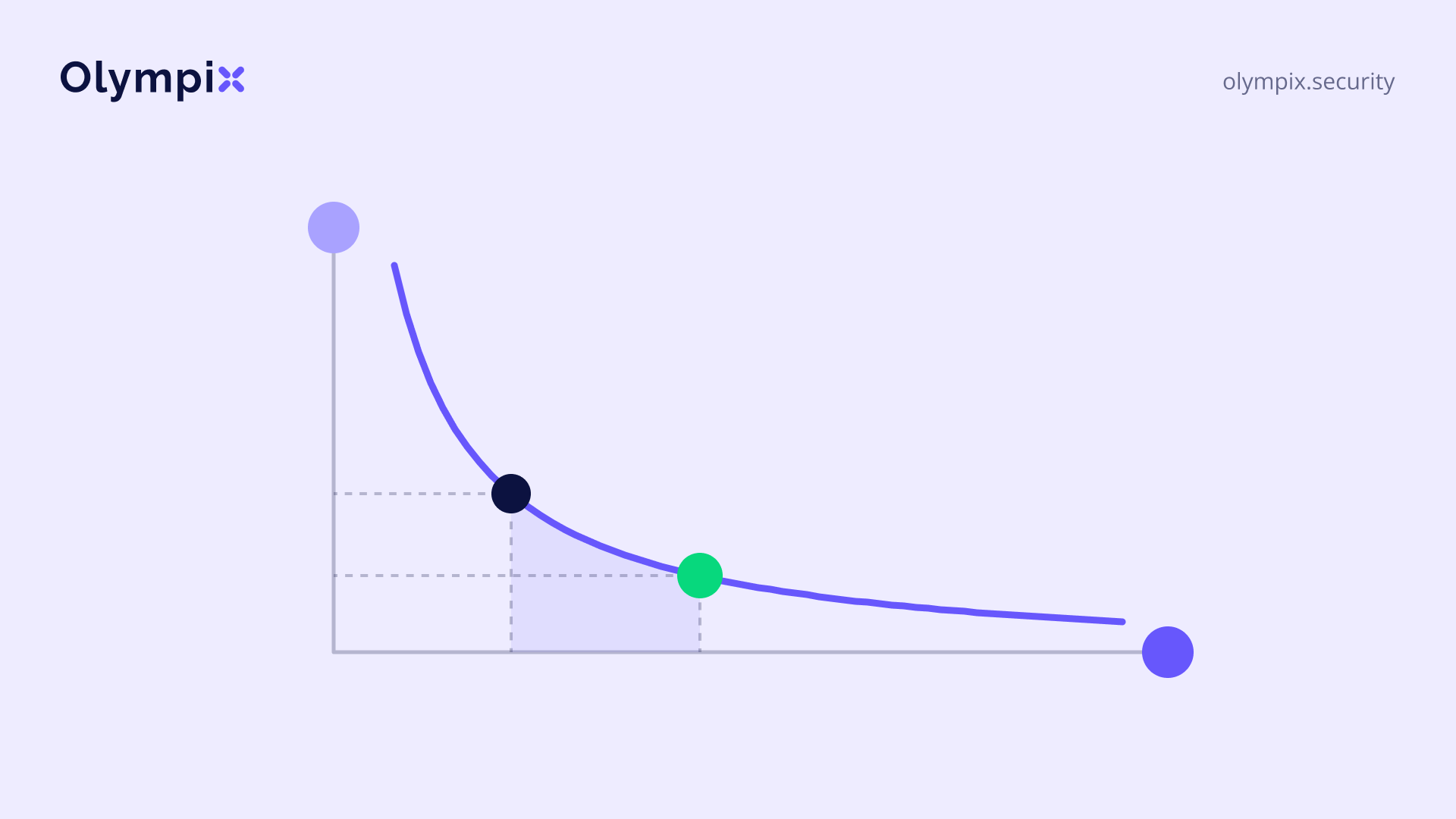
Automated Market Makers (AMMs) power most modern DeFi decentralized exchanges (DEXs). These systems use mathematical formulas to price assets based on supply and demand within liquidity pools. The most famous example is Uniswap's constant product formula (x × y = k), which automatically adjusts prices as trades occur.
Order Book DEXs like dYdX and Vertex operate differently, matching buy and sell orders similar to traditional exchanges but settling transactions on-chain. While these offer tighter spreads, they often reintroduce centralization through off-chain order matching systems.
How DeFi Decentralized Exchanges (DEXs) Differ from Centralized Exchanges
The distinction between DeFi decentralized exchanges (DEXs) and centralized exchanges (CEXs) extends far beyond technical architecture—it's a fundamental shift in how financial systems operate.
Custody and Control
Centralized Exchanges:
- Hold your funds in their wallets
- Can freeze withdrawals or accounts
- Require KYC/AML compliance
- Offer customer support and dispute resolution
DeFi Decentralized Exchanges (DEXs):
- You maintain custody of your assets
- No account creation or approval process
- Pseudonymous transactions
- No customer support—smart contracts are final
Risk Profiles
Centralized exchanges carry counterparty risk; the platform could become insolvent (like FTX) or restrict access to your funds. DeFi decentralized exchanges (DEXs) eliminate this counterparty risk but introduce smart contract risk, where bugs or exploits can drain funds without recourse.
The Real Benefits of DeFi Decentralized Exchanges (DEXs)
Permissionless Access and Global Liquidity
DeFi decentralized exchanges (DEXs) enable anyone with a wallet to trade immediately. No geographic restrictions, no waiting for account approval, no minimum deposits. This accessibility has democratized access to financial markets globally.
Self-Custody
Your tokens never leave your wallet when using DeFi decentralized exchanges (DEXs), you're using them directly through smart contract interactions. This eliminates the risk of exchange hacks or insider theft that plague centralized platforms.
Composability and Innovation
DeFi decentralized exchanges (DEXs) serve as building blocks for complex financial products. Yield farming, automated portfolio management, and flash loans all build upon DEX infrastructure, creating new financial primitives impossible in traditional finance.
Hidden Risks in DeFi Decentralized Exchanges (DEXs)
Smart Contract Vulnerabilities
Every interaction with DeFi decentralized exchanges (DEXs) involves executing smart contract code. If this code contains bugs or logical flaws, attackers can exploit them to drain funds. Unlike traditional systems, there's no way to "roll back" transactions or provide customer support.
Real Examples:
- Harvest Finance (2020): Flash loan attack manipulated price oracles, leading to $33M in losses
- bZx Protocol (2020-2021): Multiple exploits targeting oracle price feeds
- Mango Markets (2022): $114M lost through oracle manipulation using thin order books
Oracle Manipulation and Price Feeds
DeFi decentralized exchanges (DEXs) rely on oracles to determine asset prices for various functions. When these price feeds can be manipulated or delayed, attackers can:
- Create undercollateralized loans
- Trigger false liquidations
- Arbitrage inflated asset prices
Maximum Extractable Value (MEV)
MEV represents profit that can be extracted by reordering, including, or censoring transactions within blocks. On DeFi decentralized exchanges (DEXs), this often manifests as:
- Sandwich attacks: Bots detect large trades and place transactions before and after to profit from price impact
- Front-running: Copying profitable trades with higher gas fees to execute first
- Arbitrage: Exploiting price differences between DEXs
Frontend and Interface Risks
Even secure DeFi decentralized exchanges (DEXs) can be compromised through malicious frontends. DNS hijacking, compromised build pipelines, or phishing sites can redirect users to contracts that steal funds instead of executing legitimate trades.
How to Evaluate the Safety of DeFi Decentralized Exchanges (DEXs)
Security Audit Assessment
While security audits are important, they're not guarantees. When evaluating DeFi decentralized exchanges (DEXs), consider:
- Audit quality: Who performed the audit and what was their methodology?
- Issue remediation: Were identified vulnerabilities actually fixed?
- Battle testing: Has the protocol survived extended mainnet operation under adversarial conditions?
On-Chain Activity Analysis
Examine these metrics for DeFi decentralized exchanges (DEXs):
- Total Value Locked (TVL): Indicates user confidence and battle-testing
- Daily volume: Shows actual usage vs. wash trading
- User retention: Sustained growth suggests product-market fit
Governance and Admin Controls
Understanding control mechanisms in DeFi decentralized exchanges (DEXs) is crucial:
- Immutability: Can the protocol be changed after deployment?
- Admin keys: Who controls upgrade functions and emergency stops?
- Timelock mechanisms: Are there delays before implementing changes?
- Governance transparency: How are decisions made and communicated?
Advanced Concepts in DeFi Decentralized Exchanges (DEXs)
Cross-Chain and Multi-Chain Trading
Modern DeFi decentralized exchanges (DEXs) increasingly operate across multiple blockchains, enabling trading between different networks. However, this introduces additional complexity:
- Bridge security: Cross-chain bridges represent major attack vectors
- Validator assumptions: Multi-chain systems require trust in various validator sets
- Atomic execution: Cross-chain trades may fail partially, creating capital inefficiency
Intent-Based Trading
Emerging DeFi decentralized exchanges (DEXs) are implementing intent-based architectures where users specify desired outcomes rather than explicit transaction paths. Solvers compete to fulfill these intents, potentially improving execution quality while abstracting complexity.
Privacy-Preserving DEXs
Some DeFi decentralized exchanges (DEXs) now incorporate zero-knowledge proofs or mixing protocols to provide transaction privacy, addressing concerns about MEV and front-running while maintaining decentralization.
Best Practices for Using DeFi Decentralized Exchanges (DEXs)
Transaction Verification
Before confirming any transaction on DeFi decentralized exchanges (DEXs):
- Review transaction details: Understand what contracts you're authorizing
- Verify contract addresses: Ensure you're interacting with legitimate protocols
- Check slippage tolerance: Set appropriate limits for price impact
- Simulate transactions: Use tools that preview transaction outcomes
Risk Management Strategies
- Start small: Test new DeFi decentralized exchanges (DEXs) with minimal amounts
- Diversify protocols: Don't concentrate all funds in a single platform
- Monitor positions: DeFi positions can change rapidly due to impermanent loss and yield changes
- Emergency planning: Know how to quickly exit positions if needed
Staying Informed
The DeFi decentralized exchanges (DEXs) landscape evolves rapidly. Stay updated through:
- Protocol announcements: Follow official channels for updates
- Security researchers: Monitor findings from auditors and white hat hackers
- Community discussions: Engage with protocol communities to understand risks
- Incident reports: Learn from exploits and failures in the space
The Future of DeFi Decentralized Exchanges (DEXs)
Technological Evolution
DeFi decentralized exchanges (DEXs) continue advancing through:
- Layer 2 scaling: Reducing costs and increasing transaction throughput
- Improved UX: Making interfaces more intuitive for mainstream adoption
- Better pricing algorithms: Dynamic curves that adapt to market conditions
- Enhanced privacy: Protecting user data while maintaining transparency
Regulatory Considerations
As DeFi decentralized exchanges (DEXs) gain adoption, regulatory frameworks are evolving. Key considerations include:
- Compliance requirements: How regulations might affect protocol development
- Geographic restrictions: Potential access limitations in certain jurisdictions
- Reporting obligations: Tax and disclosure requirements for users
Integration with Traditional Finance
DeFi decentralized exchanges (DEXs) are increasingly bridging with traditional financial systems through:
- Institutional adoption: Major firms integrating DEX liquidity
- Regulatory compliance: Protocols implementing KYC/AML where required
- Fiat integration: Direct fiat on-ramps to DEX protocols
Conclusion: Navigating DeFi Decentralized Exchanges (DEXs) Safely
DeFi decentralized exchanges (DEXs) represent a fundamental shift toward self-sovereign finance, offering unprecedented control over assets and access to global liquidity. However, this power comes with significant responsibility and new categories of risk.
Success with DeFi decentralized exchanges (DEXs) requires:
- Technical understanding: Know what you're signing before executing transactions
- Risk awareness: Understand the full spectrum of potential losses
- Continuous learning: Stay updated as protocols and risks evolve
- Prudent sizing: Only risk what you can afford to lose completely
The promise of DeFi decentralized exchanges (DEXs) is compelling; permissionless, global, and self-custodial trading. But this promise is only as strong as your understanding of the underlying systems and risks. Approach with knowledge, caution, and respect for the power you're wielding.
Remember: You're not just using an app when you interact with DeFi decentralized exchanges (DEXs), you're signing smart contracts that execute automatically and irreversibly. Make sure you understand what you're agreeing to.
This guide provides educational information about DeFi decentralized exchanges (DEXs) and should not be considered financial advice. Always do your own research and consider consulting with financial professionals before making investment decisions.
More from the blog
See every article →



See what Olympix finds on your own code
Send us a repo that's already been audited, and we'll run Olympix at the same commit and show you what comes back.